Sheet C-204Ongoing
SHOWRUNNER
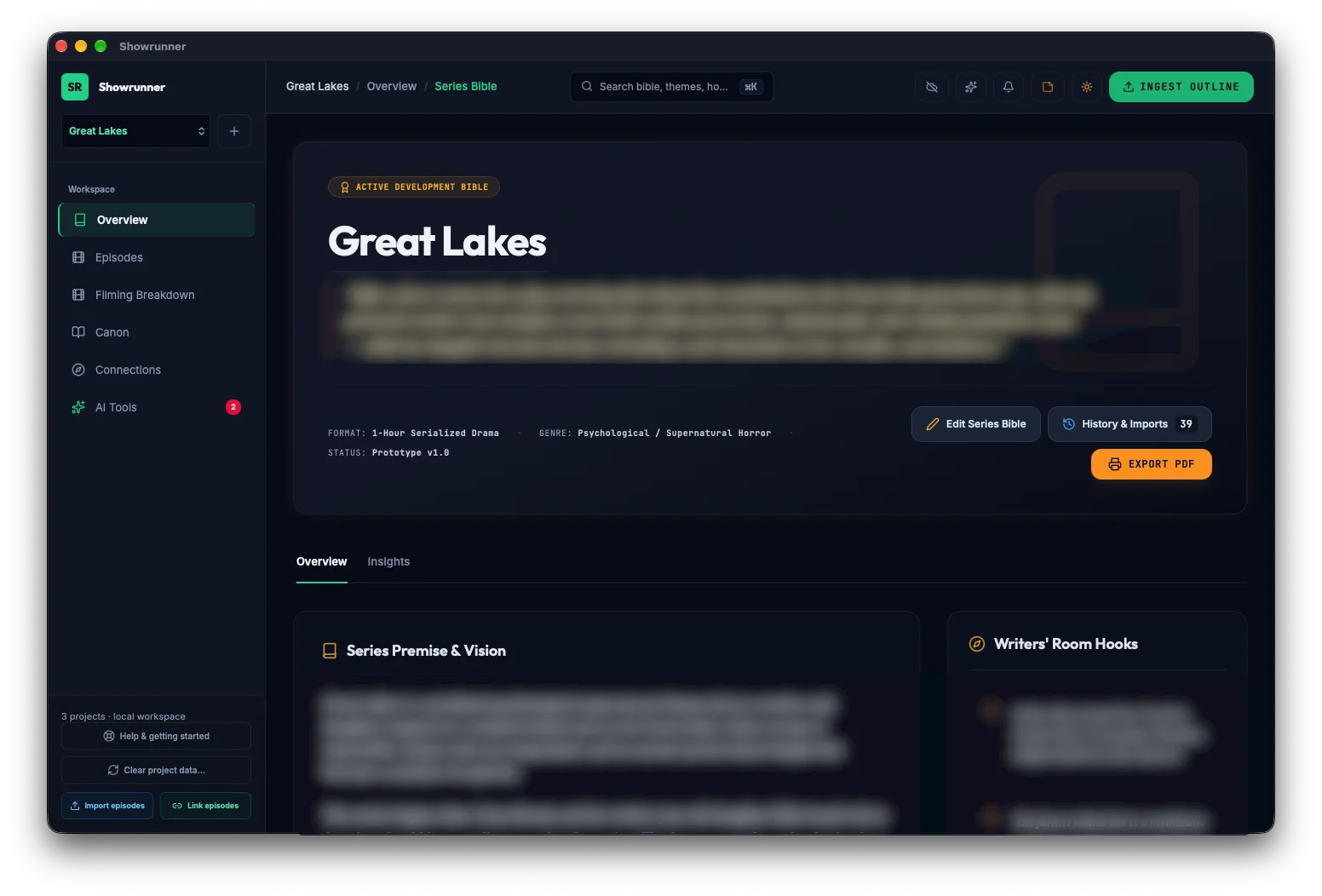
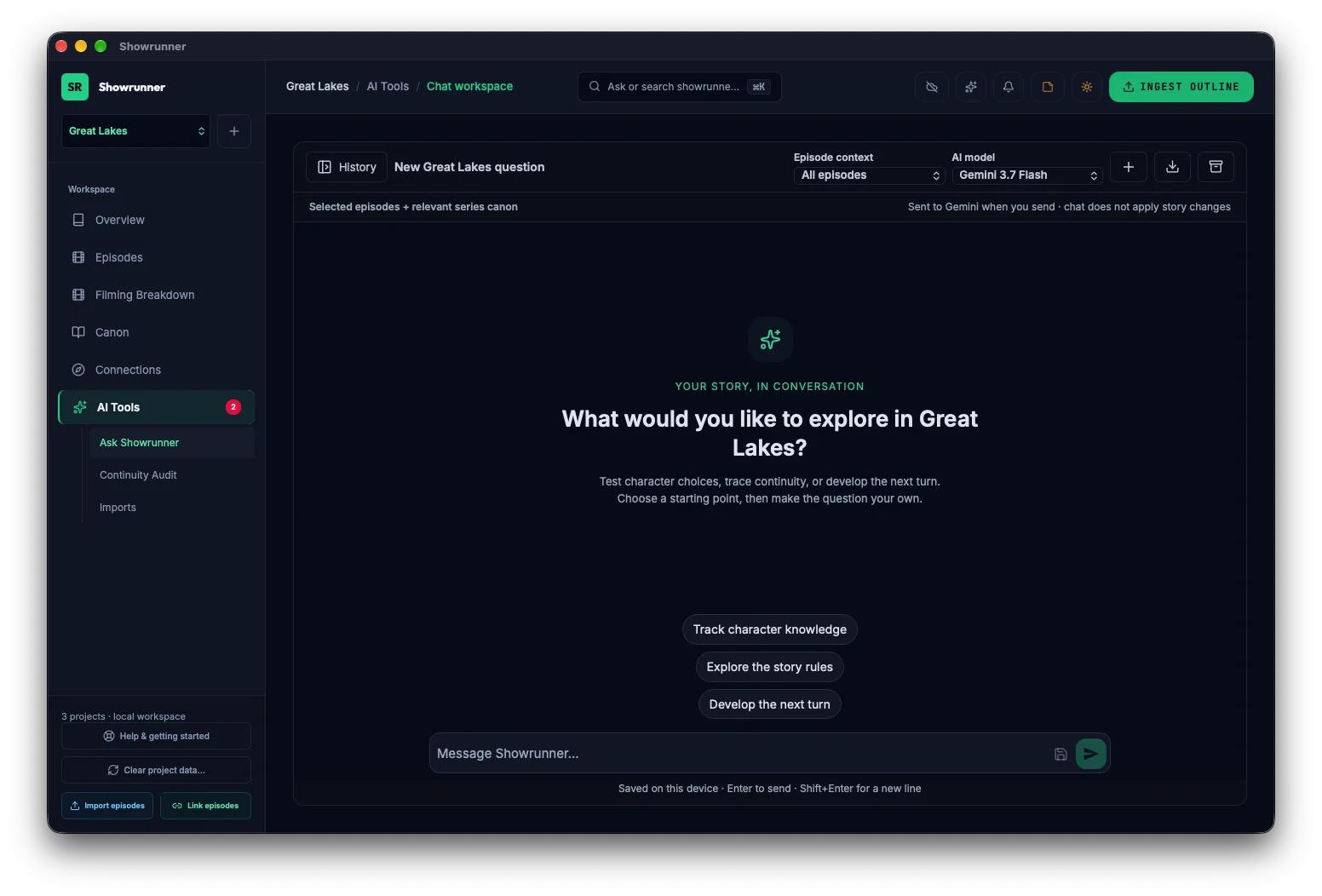
Showrunner is a desktop workspace for developing, organizing, and maintaining film and television projects. It brings story planning, canon, screenplay review, visual references, and filming preparation into one project environment.
Purpose
Long-form storytelling produces information that becomes difficult to track across scripts, notes, outlines, and reference documents. Showrunner organizes that material around connected characters, locations, episodes, themes, mysteries, and story rules, helping writers develop new material while preserving continuity.
Core capabilities
- Project library and story bible: Separate film and television projects with their own characters, locations, relationships, world mechanics, mysteries, themes, and notes.
- Episode development: An Episode Room for developing story pressures, arranging beats and storylines, tracking promises and payoffs, and carrying a reviewed handoff into the next episode.
- Temporal continuity: Separate records for creator truth, audience knowledge, and character beliefs, with episode boundaries and proposed or locked states.
- Film workspace: Screenplay import, reading and editing, named revisions, scene-linked planning, canon records, and review findings.
- AI assistance: Optional Gemini-powered development, continuity review, and contextual chat. Conversation branches preserve alternative directions; proposed screenplay changes require acceptance.
- Visual Atlas: Character and location references, design identities, visual concepts, and scene boards with approval states.
- Filming breakdowns: Scene-level cast, locations, props, wardrobe, effects, equipment, shoot-day information, and department requirements, exportable as PDF packets or CSV.
- Persistence and interchange: Local workspace storage, JSON backups, Google Drive synchronization, and desktop imports or links to Show Writer projects.
Typical workflow
Create a project → import source material or build the bible → develop episodes or film structure → review continuity and explore alternatives → refine the screenplay → prepare production breakdowns and exports.
Technical foundation
React and TypeScript provide the interface, with Vite, an Express backend, and a Tauri desktop shell. Gemini supplies optional AI services. Workspace documents primarily use IndexedDB, with migration and fallback support for older local storage.
Current position
The repository contains a substantial implemented application covering both television and film workflows. The package version is 1.0.2, with an installed desktop build and prior automated and desktop verification.
Current boundaries include desktop-focused layouts, manual filming requirements and scheduling, and AI output that still requires editorial judgment. Chat history has its own local persistence and backup path rather than being included in story-bible Drive synchronization.
Relationship to Show Writer
Showrunner already supports reading and manually refreshing linked Show Writer .sw projects for television episodes, and can export approved beats as a Fountain outline. That provides a working handoff, while a broader two-way synchronization system remains future work.