01_Project Specs
Washington, DC — RFK Campus
2026
Urban Design
RFK Campus Redevelopment
Systemic Integration & Mixed-Use Density
A large car-oriented superblock limited neighborhood access and underused riverfront land.
Mapped access gaps, density targets, open-space ratios, transit edges, and ecological constraints.
A mixed-use redevelopment proposal with diagrams, massing studies, and urban logic plates.
QGIS, Rhino, Illustrator
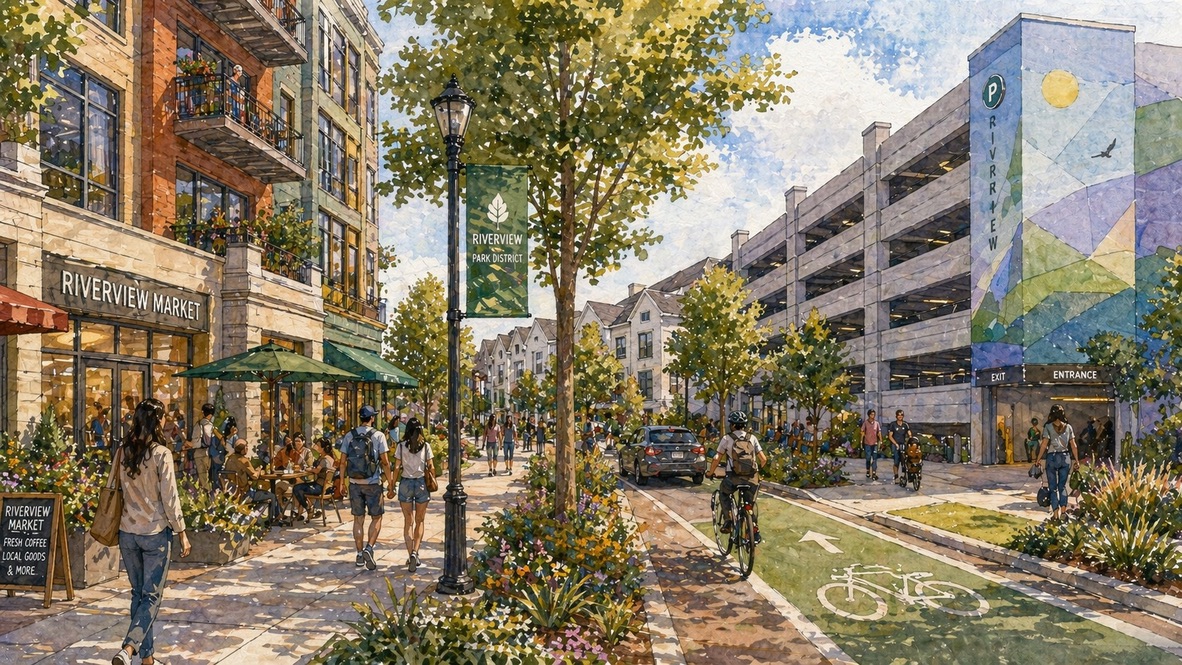
Massing Study: Volumetric density and shadow analysis.
The RFK site operates as a disconnected superblock along the Anacostia River, historically defined by car-oriented access and limited neighborhood integration. This proposal restructures the site into a connected, mixed-use district by restoring permeability, integrating transit, and aligning density with public space and ecological constraints.
Density is strategically concentrated within mixed-use zones to achieve a high overall target (36.1 units/acre) while preserving over 30% of the site as open space. The stadium is embedded within the urban fabric rather than isolated, enabling year-round activation and reinforcing connections to adjacent neighborhoods.
Software
QGIS, Rhino, Illustrator
Focus
Urban Systems, Density Strategy, Public Realm Integration
Area
180 Acres
Key Metric
36.1 units/acre (targeted density model)
"Breaking the car-oriented isolation requires restorative connectivity through the neighborhood grid."
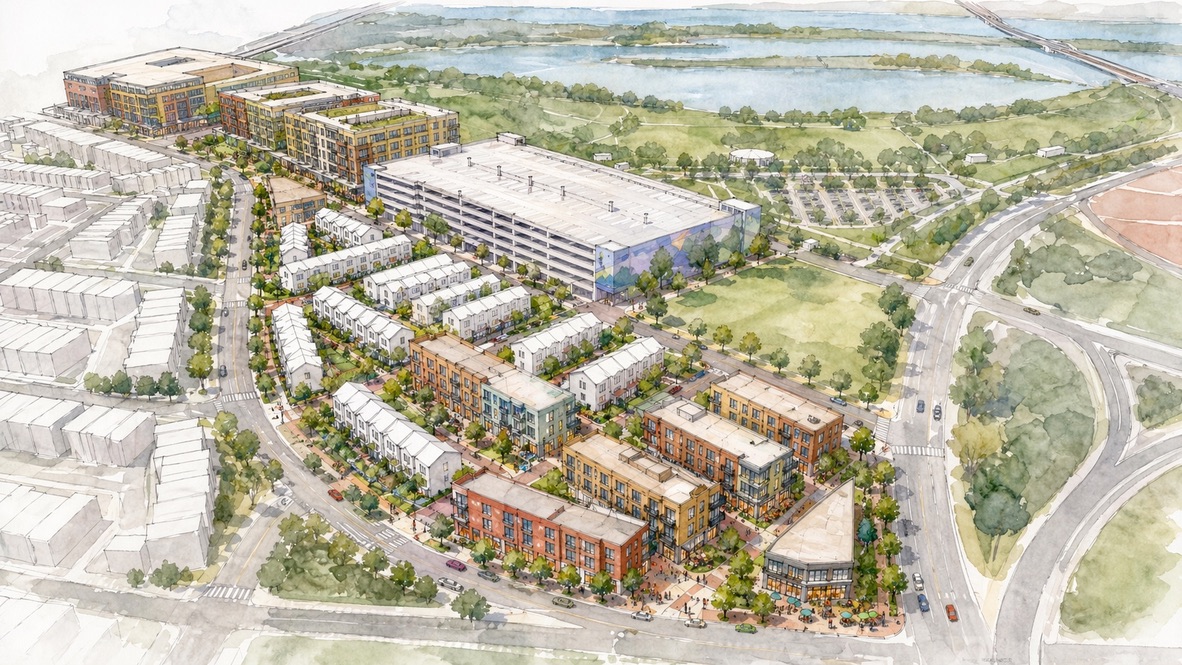
ISO_01 // TECTONIC_REASONING
This project extends a broader investigation into spatial systems and urban structure, focusing on how density, infrastructure, and public space can be coordinated to produce coherent and livable environments.
View Research