01_Project Specs
Washington, DC
2024
Architecture
UDC Culinary Science, Hospitality & the Arts
Institutional Adaptive Reuse / Academic-Commercial Concept Proposal
An underused institutional commercial lease needed a stronger public, academic, and partnership purpose.
Coordinated first-floor public interface, second-floor exhibition and lounge programming, and rooftop public realm into one adaptive reuse strategy.
Concept proposal, program strategy, interior studies, rooftop design, plans, and presentation renderings.
Revit, SketchUp, Enscape, Adobe Creative Suite
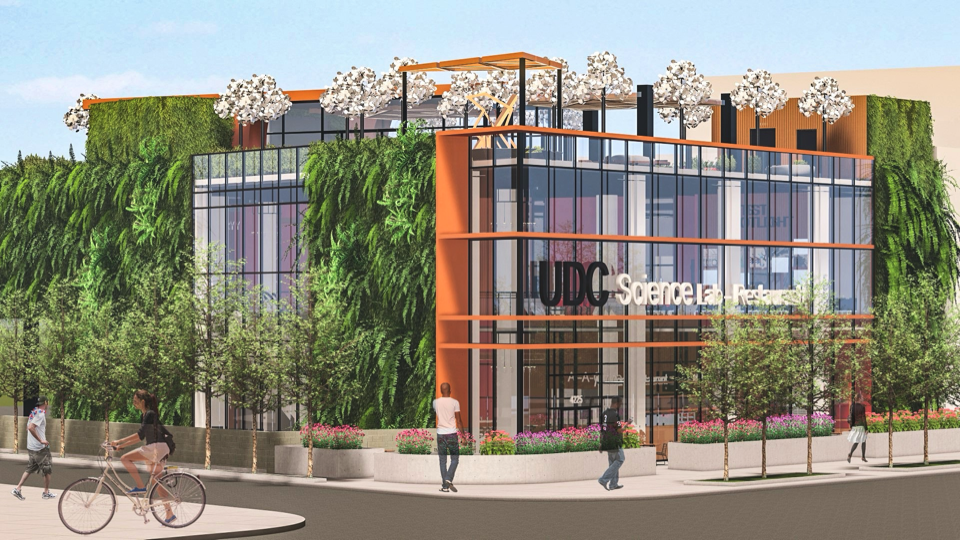
Exterior Transformation: Facade and rooftop presence within the Connecticut Avenue context.
Developed during my first semester of graduate school, this collaborative concept proposal explored the adaptive reuse of UDC's underutilized Connecticut Avenue commercial lease into a new interdisciplinary hub for culinary science, hospitality, arts, entrepreneurship, and public engagement. The project proposed transforming a dormant commercial building into a layered academic and community-facing ecosystem: a public-facing cafe and restaurant lab at street level, culinary exhibition and arts programming above, and a rooftop pavilion, garden, and dining environment that extended the building's educational mission into a visible urban amenity. Although completed as an early graduate concept study, the project became an important foundation in my development as a designer, introducing architecture as a strategic tool for unlocking institutional value and connecting academic programs to public life.
The proposal organized the building as a vertical academic-commercial ecosystem, coordinating street-level public food activity, second-floor culinary exhibition and arts programming, and a rooftop pavilion, garden, and dining sequence. This was a collaborative graduate concept proposal. Cesar Borges dos Santos led the first-floor planning and exterior facade transformation, while Trever Bellew led the second-floor and rooftop design areas. Both designers coordinated across zones to ensure that the interior program, rooftop experience, and exterior architectural language reinforced one another.
The proposal began with an institutional challenge: an underused commercial property tied to UDC's Connecticut Avenue presence. Rather than treating the site as a dormant lease condition, the project reframed it as an opportunity to connect academic programming, public engagement, and strategic partnership potential.
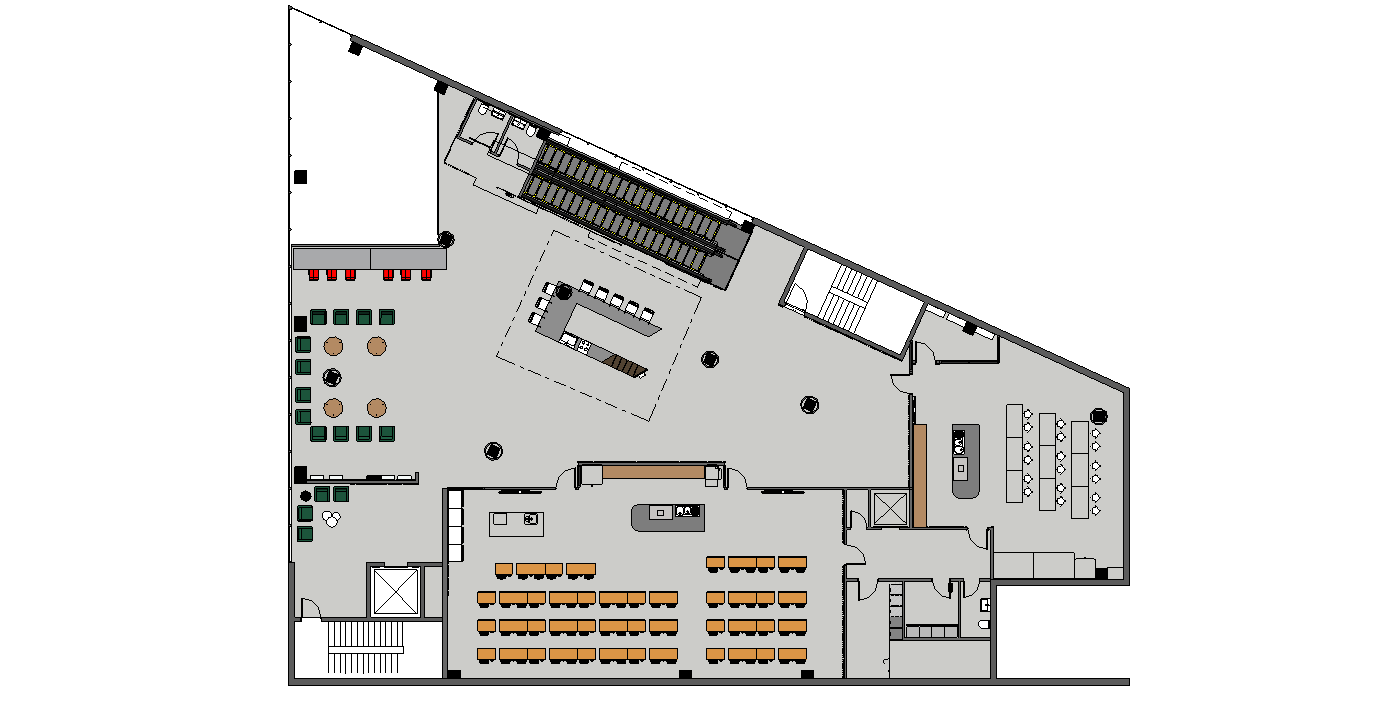
The concept organized the building as a vertical academic-commercial ecosystem. The ground floor supported public-facing food, cafe, and restaurant activity; the second floor introduced culinary exhibition, arts, and lounge programming; and the rooftop became a garden, pavilion, and dining environment that expanded the project's public and educational identity.
My primary design focus was the second floor and rooftop experience. This included the culinary exhibition level, artist spotlight/lounge environment, rooftop pavilion, garden areas, outdoor dining sequence, and the relationship between elevated public space and the building's broader academic mission.
Because Cesar led the first floor and exterior facade transformation, the project required ongoing coordination between our design areas. We worked to ensure that the exterior language, interior spatial sequence, rooftop identity, and public-facing program read as one coherent proposal rather than separate design zones.
This project is included as an early graduate example of strategic design thinking. It shows the beginning of a design trajectory later developed through research, urban analysis, computational workflows, and institutional-scale proposals: architecture as a tool for transforming underused assets into public, educational, and civic value.
Project
UDC Culinary Science, Hospitality & the Arts
Type
Institutional Adaptive Reuse / Academic-Commercial Concept Proposal
Role
Graduate Design Collaborator
Primary Contributions
Second-floor design; rooftop pavilion, garden, dining, and public experience; interior/exterior coordination
Collaborator
Cesar Borges dos Santos
Context
First-semester graduate concept proposal
"The proposal links public food culture, culinary education, arts programming, and rooftop hospitality into one coordinated institutional reuse strategy."
ISO_01 // TECTONIC_REASONING
This project is included as an early graduate example of strategic design thinking. It shows the beginning of a design trajectory later developed through research, urban analysis, computational workflows, and institutional-scale proposals: architecture as a tool for transforming underused assets into public, educational, and civic value.
View Research